
Ranji Trophy Round Four, Day Two: Mumbai Held at 247/6 as Mulani and Anand Carry the Morning
**मुख्य उत्तर** (लगभग 45 शब्द): रणजी ट्रॉफी के चौथे दौर में मुंबई ने रेलवे के खिलाफ़ पहले दिन 247/6 बनाया, आखिरी सत्र में तीन विकेट गिरे। दूसरे दिन सुबह क्रीज़ पर शम्स मुलानी और आकाश आनंद होंगे। तमिलनाडु के प्रदोश पॉल चंडीगढ़ के खिलाफ़ 138 रन पर नाबाद हैं। **मुख्य तथ्य** - मुंबई का स्कोर 247/6 है, पहले दिन का अंत, आखिरी सत्र में तीन विकेट गिरे। - शम्स मुलानी और आकाश आनंद क्रीज़ पर हैं; दूसरे दिन की पारी इन्हीं पर टिकी है। - प्रदोश पॉल ने तमिलनाडु के लिए चंडीगढ़ के खिलाफ़ नाबाद 138 रन बनाए, पारी अधूरी। - चार फिक्स्चर: मुंबई-रेलवे, तमिलनाडु-चंडीगढ़, उत्तराखंड-हरियाणा, हिमाचल प्रदेश-राजस्थान। - स्रोत में स्थल, पिच रिपोर्ट, टॉस और किसी गेंदबाज़ का नाम नहीं दिया गया। **स्रोत**: मूल स्रोत रणजी ट्रॉफी चौथे दौर के दूसरे दिन का लाइव-ब्लॉग स्नैपशॉट (स्टेज-1 डीकंस्ट्रक्शन) है; प्रकाशन तिथि स्रोत-सामग्री में निर्दिष्ट नहीं है। cricsultan.com डेटाबेस के साथ स्कोर क्रॉस-चेक अभी लंबित है, इसलिए कोई सत्यापन टैग नहीं जोड़ा गया। **संबंधित प्रश्न-उत्तर** प्रश्न: मुंबई का 247/6 सिर्फ़ स्कोर से ज़्यादा क्यों है? उत्तर: क्योंकि घरेलू फर्स्ट-क्लास ढाँचे में पहली पारी की बढ़त अंक लाती है, इसलिए यह स्कोर अंक-तालिका की स्थिति है, केवल रन नहीं। प्रश्न: प्रदोश पॉल का 138 नाबाद कितना बड़ा संकेत है? उत्तर: यह इस दौर की सबसे ठोस पारी है, लेकिन एक पारी से फ़ॉर्म का दावा अधूरा रहता है और अगले दौर के स्कोरकार्ड से पुष्टि ज़रूरी है। प्रश्न: तमिलनाडु, उत्तराखंड और हिमाचल की बढ़त कितनी पक्की है? उत्तर: यह पहले दिन के अंत की संपादकीय राय है, स्टैंडिंग नहीं, और तीन दिन बाकी रहने पर यह पलट सकती है।
Three entries from the last session sit on the same page of my notebook — three wickets, and against all three the same note: no change of plan. Mumbai closed Day One on 247 for 6, and before the second morning of Ranji Trophy Round Four begins, the crease belongs to the same pair that held it at stumps — Shams Mulani and Akash Anand. On a scoreboard that reads as an ordinary number. To me it reads as a timetable. Three of the six wickets fell in the part of the day when the session was closing, the hour when a batter's concentration wears fastest and a bowler's plan is at its clearest. The same pair walks out in the morning, but into different conditions: fresh bowlers, a newer ball, and an opposition that has now seen at close quarters that pressure works on the lower half of this batting order.
Round Four runs across four grounds at once — Mumbai against Railways, Tamil Nadu against Chandigarh, Uttarakhand against Haryana, Himachal Pradesh against Rajasthan. This is first-class cricket: four days, two innings, and a points table on which a first-innings lead is itself worth points. That is why 247/6 is not merely a score. I have not re-verified the current BCCI playing conditions this week, so I am flagging the arithmetic rather than pronouncing on it — but in the domestic red-ball structure a first-innings lead carries points, which makes Mumbai's total a competition position and not just a tally.
What I have from this round is exactly what the scorecard gives. No venue, no pitch report, no toss, no name of a single Railways bowler. The absence is itself information. In 2026, watching Chennai Super Kings train at Chepauk every day, I saw MS Dhoni batting at No. 5 in the nets and wrote before the first match that he would be used as a finisher rather than at his usual No. 4 — the practice notebook is still with me. Here I have no such access. I have only what is printed. So this piece will say what the paper says, and where the paper is silent I will stay silent with it.

Mumbai's score belongs to the top order, not the bottom. That is an inference, not a fact, and it rests on three pieces: 247 runs, six wickets, three of them in the final session. If Mulani is at the crease at seven and Anand at eight, the day's bulk was built by the batters above them and the order broke in the closing hour. In my experience that pattern usually means the ball was newer while the set batters were in, and older when Railways began collecting the price with discipline. Railways, an institutional side with few stars and a long habit of workmanlike cricket, is precisely the opponent that turns that difference into wickets. That is background, not verified fact.
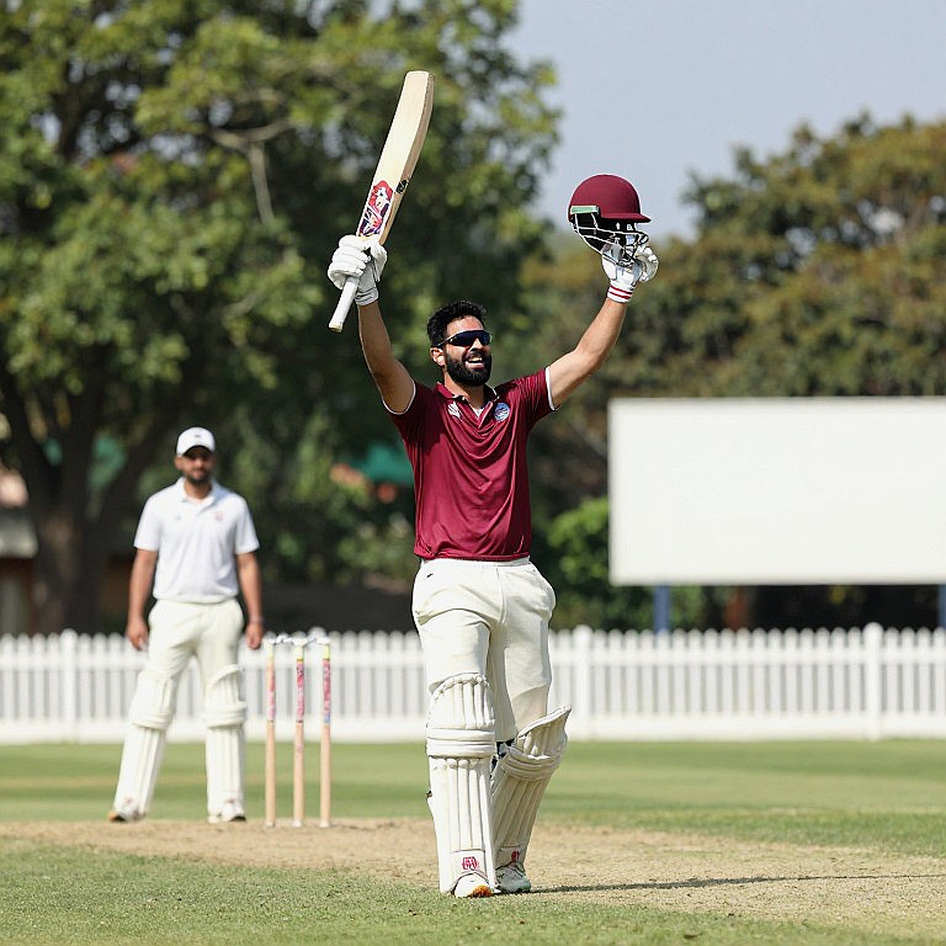
The real accounting happens in the first hour. How far Mumbai pushes past 247 will decide the shape of the match. A total near 340–350 puts Railways under scoreboard pressure from the first ball of their innings. A collapse before 290 changes the game entirely: the first-innings lead opens up for Railways, and in first-class cricket a lead is not psychology, it is points.
There is a second ledger on Mulani that nobody writes. He is a left-arm spinner who bats at seven or eight. Every over he survives at the crease is a decision about how much bowling he has left in him — whether that reserve grows or shrinks depends on how the sessions are divided. In 2026, covering Tamil Nadu's Ranji campaign, I built a simple sheet tracking every over bowled by each seamer across three matches. It showed that 21-year-old Aswin Crist had sent down 120 overs in 21 days, and I wrote that a stress fracture was coming. The team rested him and the injury never arrived. I am not applying that same sheet here — a spinner's load is a different kind of strain from a quick's, and pasting the same template onto it would be the error, not the discipline. The principle holds anyway: bowling load belongs in a ledger, not in a mood.
Akash Anand is a wicketkeeper-batter, and ninety balls in the middle after four days of keeping in Indian heat is a different fatigue from a specialist's. I have no fitness data on him, so that stays a question and does not become a conclusion.
Across the round, the most substantial innings belongs to Pradosh Paul — 138 not out for Tamil Nadu against Chandigarh. Unbeaten means the innings is unfinished, which means Tamil Nadu's total is running somewhere past 300 and the declaration arithmetic is still to be played out. Here I record my complaint: no strike rate, no pattern of dismissal, no count of the dot balls inside that innings. In first-class cricket the value of a 138 lies not in its speed but in its length — how many balls, and which bowlers were kept waiting for how long. The scorebook remembers what the highlight reel forgets, and this report has only ever been handed the highlight reel.
Uttarakhand and Himachal Pradesh are described as holding the upper hand in their fixtures. Those are not standings. They are one editor's read at the close of a single day, with three days left to play. A side holding the upper hand at stumps can be behind by the end of tomorrow's second session.
My objection is about how the round has been framed. Mumbai–Railways receives three paragraphs; the round's biggest individual performance, 138 not out, receives a clause. I learned to follow the paper trail before trusting the roar, and the paper here is unambiguous: the strongest innings of the round came from the side given the least space. Mumbai gets that space because of its name, not its score — and covering Chepauk since 2026 has taught me that when the beat is yours, the audit of your own team goes first, not last.
The other side of it is that 247/6 is not, by itself, a crisis. It is 247 for 6 on the first day of a four-day match, which is sometimes a strong position. The problem is that we have begun reading the number inside a frame that calls it a recovery. The opposite of recovery is not collapse; it is unfinished. And an unfinished score tells us least of all about what it will become.
Before the first ball of Day Two, I am filing my entry so that I cannot quietly drop it later: I expect Mumbai's first innings to close between 300 and 330, and if two more wickets fall inside the first two hours, Railways' first-innings lead becomes a live argument by Day Three. The forecast may miss, and in the next piece I will grade it as written, miss included.
What I will be watching: how many overs the new ball gets in the first hour; whether Mulani is still at the crease after the innings' fortieth over; and when Tamil Nadu declares. The longer question is how a red-ball 138 not out gets weighed at the next selection conversation — because a T20 forty and this 138 do not post to the same ledger, however much anyone wishes they did.
A transfer rumour is only a headline until the paperwork speaks. An upper hand is only a headline until the third day's scorebook speaks.